Tag: film blog

  • Bodycam (2025) Film Review

    Bodycam (2025) Film Review

    Estimated reading time: 5 minutes

    Bodycam (2025) is a found footage film that pairs cops and demons with a horrifying result. But, is it a decent entry in the genre or one of the worst found footage films of all time?

    Director: Brandon Christensen

    Running Time: 75 minutes

    Rating: 🌟1/2

    Description

    Two police officers go to a domestic incident at a house in the suburbs. They assume it’s what they consider to be a run-of-the-mill incident involving addicted people. However, once they arrive, things quickly get out of hand and carnage ensues.

    Upon entering the house, they find a couple who appear to be under the influence of a substance. The mother is covered in blood and the father attempts to get help for his baby. Bryce, one of the police officers, mistakes this attempt and fatally shoots both the father and his baby.

    Subsequently, Bryce pleads with Jackson to cover the incident up. His wife is pregnant with their first child and he doesn’t want to lose everything he’s been working for. Jackson is understandably reluctant and there are conversations about trust and duty.

    A strange symbol in drawn in the house and in various places around the neighbourhood, often in blood. The suburb is reminiscent of LA’s ‘Skid Row’ with users and tents lined up down the pavements. Because of this, Bryce assumes these symbols are the product of someone’s high.

    Local hacker Esposito agrees to erase the bodycam footage for Bryce. When she hears the mother in the footage mention ‘The Underman’ though, she changes her mind. She wants nothing to do with it and refuses to erase the camera, running out and leaving the pair to fend for themselves.

    What follows is a battle of spirit between the police officers and ‘The Underman’. There is also some input from Jackson’s mother who is a priestess of the light. Despite her attempts to help, bloody scenes unfold and the ending is equal parts gross and disorienting.

    Review

    Initially, it seems that the film is critiquing police officers, which makes sense given the sheer amount of deaths they cause, especially in the USA. Yet, the jarring ending and descent into chaos pulls away from any possible commentary that might have been there.

    Found footage films can be so incredibly hit-or-miss. This one starts off as something unique but devolves into one of the worst ones I’ve seen for some time. The sole use of bodycam and dashcam footage is fairly interesting. Yet, by the end, its sole purpose is to deliver one corny jump scare after another which ruins its effectivity.

    There is a decent story in there but it loses against the supernatural storyline. The atrocious acting from some of the cast members also removed me from the setting. It made me all too aware I was watching a questionable found footage film I found on Shudder.

    The low budget is plain to see, especially at the end with the makeup. Clearly, they have taken some inspiration from Slenderman in terms of story and costume. The result of this is just a bit weird. Rather than being a unique tale with its own quirks and intrigues, it’s riffing off a different folktale and it doesn’t even do it better.

    Jackson’s mother, the priestess of the light, is the most interesting character. There seems to be an intersection between ‘The Underman’ and drug use. She talks about how Jackson scared the former because of his refusal to inject drugs, presumably heroin, into his veins.

    Catherine’s daughter passed away due to addiction so she now spends her time trying to help other young addicted people to ‘see the light’. This could have been an interesting point but they don’t explore it in much depth. ‘The Underman’ apparently wanted Catherine because of her work against him but the story ends up being overly bland instead of reaching its full potential.

    Some reviews have claimed Bodycam is also socially tone deaf and inappropriate considering the rhetoric surrounding ICE and police officers in the USA at the moment. I can understand this. Beside the couple of conversations the pair have about informing control, Bryce’s behaviour is not necessarily criticised in a concrete, human way. There is an incident with ‘The Underman’ towards the end of the film but this is supernatural rather than reality so the story doesn’t punish him in a way viewers can relate to.

    The film’s sound is one aspect that is effective. Throughout, you only hear situational sounds, like talking, moving around the house and doors closing. However, when Bryce rushes home to try and protect his wife and unborn child, his wedding song plays. It then plays during a couple of integral points later in the film which amps up the atmosphere and makes it clear something unnerving is about to happen.

    Recommendation or Regret?

    I do think this found footage film had potential but it never managed to realise it. Rather, it is one of the worst found footage films I’ve seen and it’s unfortunate. Despite having a low budget, there’s more that could have been explored in terms of story, especially if they redirected the makeup budget which was not very well spent.

    Although the film is only seventy-five minutes in length, it feels much longer as it begins to drag in the latter half. Found footage films are generally unpolished so I find it’s better if they’re pacy and efficient, which this one sadly wasn’t for the most part.

    From time to time, I do watch random films on streaming services like Shudder and I don’t necessarily regret doing that. However, on this occasion, I regret the film I chose.

    If you’re on a masochistic mission to watch every found footage film there is, then by all means, watch this one. On the other hand, if you’re a regular film viewer though, you can probably give it a miss.

    If you want to read about more horror films, you can read my post on Upcoming Horror Releases for May 2026.
  • Remarkably Bright Creatures (2026) Review

    Remarkably Bright Creatures (2026) Review

    Estimated reading time: 4 minutes

    Director: Olivia Newman

    Running Time: 114 minutes

    Rating: 🌟🌟1/2

    Description

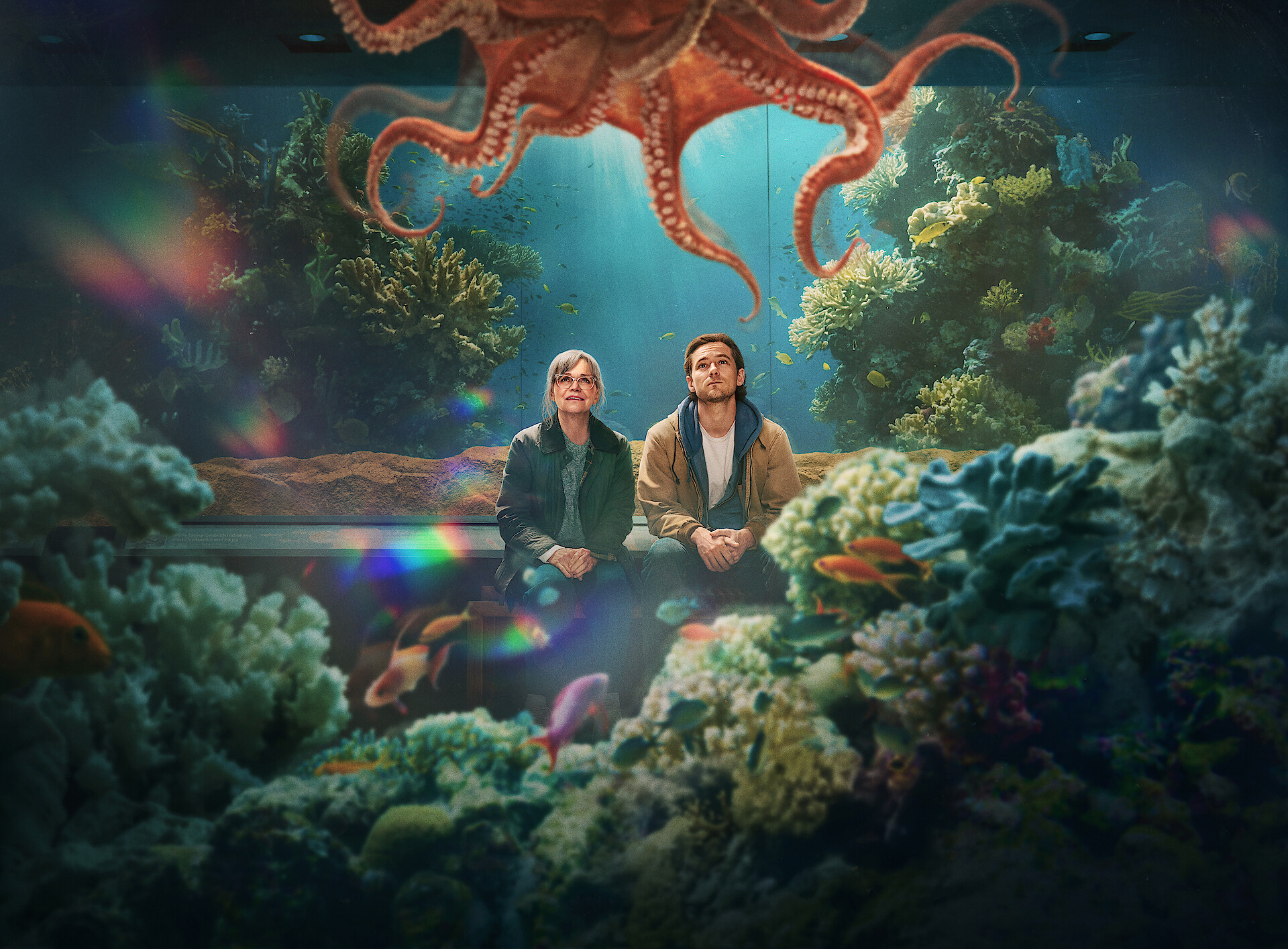
    Remarkably Bright Creatures (2026) is a film based on the hit novel of the same name by Shelby van Pelt from 2022. It sees Marcellus the octopus, voiced by Alfred Molina, create a bond with aquarium cleaner, Tova. He senses there is a ‘hole’ in her heart that he wishes to fix. The only way he can do this is by solving a mystery that surrounds her and newcomer, Cameron.

    Tova has been grieving her husband and son, finding solace in Marcellus’s company. She loves her home but feels isolated because of the rumours that have hounded her since the incident that claimed her son.

    Meanwhile, Cameron, a young man who has recently lost his mum, comes to the bay to find his long lost father. He meets Tova and her fellow town residents, quickly becoming part of the local community.

    At the end, with Marcellus’s help, Tova makes a miraculous discovery that will change their lives.

    The image shows a film still from Remarkably Bright Creatures. In it, Tova is pressing her hand against Marcellus's tank with Marcellus pressing his tentacle against the other side. They seem to understand as they look at one another.
    Tova is a sucker for Marcellus’s intelligent charm. Image Source: Slug Magazine

    Review

    Although sweet, the film didn’t resonate with me as much as it seems to have for many other people. The shots and imagery have the generic feel of your average Netflix original film. This almost ascribes a Hallmark feeling to it that isn’t what I’m seeking from new releases. Usually, if I want Hallmark standard films, it’s solely at Christmas after a snowball or two. It’s not when I’m watching something that’s reviewed highly and recommended by thousands of people.

    The dialogue is the main issue I have with Remarkably Bright Creatures. It flip-flops from being overly sentimental to being too on-the-nose. The film has a mysterious element but everything is spoken aloud for us without chance to read between the lines. Did the creators make it simply to be a feel-good film you can put on in the background while you conduct your Sunday chores?

    There were elements that pulled at my heartstrings but these were minority moments. Throughout most of the film, events felt too convenient and well put together. I also found the setting strange. It was trying too hard to portray a Stars Hollow-style community but the characters were too separate for this to be achieved. Rather than having a small town vibe, it felt like a set that had been built for a film – not so immersive.

    I did wonder whether I’m the target market for this but most of the reviews I’ve seen say it’s a film for people of all ages so it should have something for me too. However, I can’t say that it does. For a film that has emotional twists and turns, I felt surprisingly little. Maybe I just have a heart of stone but I recently watched The Farewell (2019) and that had me sobbing for hours.

    I don’t think the acting is terrible, I simply think the script and direction weren’t strong enough for the actors to give their all. The result for me is a one-dimensional, quasi-emotional film that appeals to the masses but fails to deliver once you dig beneath the surface.

    The image is a still from Remarkably Bright Creatures. It shows Tova laughing at something off-screen while holding a mug of tea.
    Tova laughs before destroying the ancient relic that is Ethan’s Grateful Dead t-shirt. Image Source: Screen Hub

    Recommendation or Regret

    If I’m completely honest, I do regret watching Remarkably Bright Creatures because I didn’t understand the hype surrounding it. I wanted to be in on the cosy conversation and unfortunately, I’m having to be the grumpy reviewer who dislikes something everyone else enjoys.

    On the other hand, I can’t blanket recommend this when many of my readers are like myself. Therefore, I’d recommend this film only if you’ve enjoyed similar ones or films with these actors in in the past.

    If you’d like to see a film I consider to pack an emotional punch, I’d recommend The Farewell (2019).

  • Junji Ito Film Adaptations Double Bill

    Junji Ito Film Adaptations Double Bill

    Estimated reading time: 4 minutes

    This post marks the beginning of a new series I’m calling ‘Double Bill’ where I watch a duo of films that relate to each other. I’m not talking ‘horror films’ but rather a category that’s a little more focused. Today, we’re talking about two Junji Ito film adaptations that will have your head spinning, maybe literally.

    Tomie

    Director: Ataru Oikawa

    Running Time: 95 minutes

    Rating: 🌟🌟🌟1/2

    The first film in this double bill, Tomie (1998), follows Tsukiko, a photography student, who is attempting to recover some forgotten memories associated with repressed trauma. During her visits with a psychiatrist, she uncovers the name of her former best friend. A name that may allow her to remember everything. That name is Tomie.

    Meanwhile, Tomie’s head is regrowing a body in the custody of a recently escaped psychiatric hospital patient. Little does Tsukiko know that Tomie is growing fast and she’s out for revenge for an incident that occurred while the pair were at school together.

    Later in the film, we meet a dodgy detective who is investigating Tomie and her seemingly supernatural nature. According to him, she is immortal and has lived several lives, causing men to fall dangerously in love with her. In the past, the detective says she has driven several of her classmates to suicide.

    When Tsukiko and Tomie eventually meet once again, there are revelations which culminate in the finale. While she has been portrayed as an evil succubus who wants to use men for her own purposes, you could say Tomie is just your average high school student. She is self-conscious and curious but the Japanese educational and societal landscape does not allow for this in this time period.

    With an excellent score and dreamlike images, Tomie feels like a relic, like an old home video lost to time. Although very much reminiscent of late 90s J-horror, it also possesses its own charm despite the tropes. The ending can also be read from a feminist perspective which is not necessarily what I expected but which I appreciated.

    From the adaptation of Uzumaki by Junji Ito. The image shows a close-up of Shuichi's father who has become obsessed with spirals. He has a large grin on his face and his eyes have massively expanded. The hue of the image is green.
    Don’t you just hate it when you turn into a spiral? Image Source: The Asian Cinema Critic

    Uzumaki

    Director: Higuchinsky

    Running Time: 90 minutes

    Rating: 🌟🌟🌟

    Uzumaki (2000) is another film made in the late 90s/early 2000s J-horror period and based on a popular manga by Junji Ito. This one follows a town that has been cursed by spirals, causing people to become obsessed with the shape. Some people want to rid their bodies of spiral-shaped anatomical structures, some people want to collect spirals and some people become spirals themselves.

    A pair of high school students resist the urge to run away to try and save the other inhabitants, including their parents. When this doesn’t go to plan, the spirals quickly take over, causing havoc and mayhem across the town.

    While Uzumaki still has a fantastic score, dreamlike pacing and unique shots, it’s not quite as good as Tomie. The special effects are fun but also borderline laugh-out-loud and my eyebrows were raised for large portions of the film. It just didn’t have the same eeriness despite arguably being about a much more terrifying scenario. I certainly don’t know anyone who wants to become a spiral.

    Although both adaptations lack some clarity, there’s a section in the middle of Uzumaki which is totally bizarre and doesn’t seem to make any sense. A detective goes to the library to research the spirals and a series of images relating to cults and symbols pop up on the screen. This is then presented as a huge and important finding. However, it doesn’t feel that revelatory and immediately loses any traction once that detective meets their spiral-related fate.

    The image shows posters of the film adaptations of Tomie and Uzumaki by Junji Ito. The poster for Tomie shows a sinister eye looking through a hole in a plastic carrier bag with blood in it. The poster for Uzumaki is green and shows a person seated with long spiral hair coming out of their head.
    Horrifying film posters for Tomie and Uzumaki. Image Source: Wiki (Tomie) and Wiki (Uzumaki)

    Recommendations or Regrets?

    If I’d read the source materials, I think I may have harboured some disappointment because this seems to be the general theme amongst other people for whom Junji Ito is a favourite. However, because I watched these films with a separate perspective, I enjoyed them both for what they were.

    While they are both somewhat cheesy and lacking in some clarity, they both feel like fever dreams that I’d want to keep returning to. The standout aspects of both were the scores and I’d quite happily listen to them both on their own without rewatching the films.

    If you’re a fan of the 90s/early 2000s trends in J-horror, I’d recommend giving these two films a watch. Even if it’s just for the bizarre nature of them both, I think they’re worth adding to your watchlist.

  • Apex (2026) Review

    Apex (2026) Review

    Estimated reading time: 4 minutes

    Director: Baltasar Kormákur

    Running Time: 96 minutes

    Rating: 🌟1/2

    Don’t you just hate it when you lose your boyfriend on a mountain and go to Australia only to be hunted by a terrifying man who likes to eat people?

    Description

    The film opens to a scene on Troll Wall in Norway. We meet Sasha and her boyfriend Tommy, two adventure climbers. They have been attempting to scale one particularly tricky part of the mountain with no luck. Tommy tells Sasha he believes his luck has run out in terms of their adrenaline-seeking activities. Later, a storm rolls in suddenly. As they are attempting to descend to safety, falling debris hits Tommy and Sasha must make a life-changing decision.

    Later, Sasha makes a trip to Australia seeking out more adventure and closure. While there, she makes a horrifying discovery (and it’s not just the venomous snakes) and must fight for survival. A true adventure film, Apex is a solid ninety plus minutes of adrenaline and suspense.

    The image shows Sasha in Apex hanging from a mountain in Australia. The background is half mountain, half sky and the sky is hazy. Sasha is covered in dirt.
    Advanced rock climbing. Image Source: Empire

    Review

    I initially dismissed this as something I wouldn’t be interested in. It seemed to be your typical adventure film where someone goes a little too far following their adrenaline desires. However, Apex is all over social media at the moment and the fuss got to me. Last night, I’d finished watching the films I’d wanted to watch for the week and I gave this a chance.

    The film does start as an ordinary adventure film and it’s easy to see what’s going to happen from the get-go. The pair are on a terrifying, sheer mountain wall when a storm hits, it seems obvious that something will go wrong and it does. If the predictability had ended there, I would likely have a higher rating. However, every step the film took, I was a few steps ahead. I knew what was happening the whole way through.

    Many people have reported the ‘twist’ coming completely out of left field and surprising them but I have to ask, really? I imagined it was too easy to guess what was happening because the director wanted us to have the knowledge but feel helpless with it but now I’m wondering if this can possibly be the case.

    Taron Egerton is excellent in Apex, he’s the standout in a sea of average. I’ve only seen him in comedies previously but he plays the villain all too well. His use of facial expressions combined with full body language and voice acting too. It’s a full combination that incites fear when you watch him and I almost forgot he’s ever been anything but a villain. Charlize Theron on the other hand was somewhat one-dimensional. I appreciate you would be rather flat if you blamed yourself for an adventure mishap but it’s too flat and meant I struggled to root for Sasha as much as I might have otherwise.

    The image shows Sasha hiding behind a rock looking concerned. She has blood on her forehead and around her eye.
    Extreme hide-and-seek. Image Source: Casey’s Movie Mania

    The setting is beautiful with Australia’s dangerous beauty being displayed around every corner. I understand why certain stunts and shots might have been difficult to achieve, even with Theron’s raw athleticism but the special effects felt excessive. At some parts during the film, nothing felt real and that’s not the effect I’m looking for when watching something as it does tend to remove you from the plot.

    In your typical adventure thriller, there’s usually one or two instances where you think, ‘how have they survived that, then?’. How many instances of this do you think there are in Apex? The answer is too many. When she starts white water rafting, she is wearing a helmet, the correct gear and is safe in her vessel. Later, she jumps into aerated water with no safety equipment. She bangs her head multiple times, she gets bashed against a mountain more times than I could count. She should not have survived longer than a third of the way in. This prevented my full immersion into the film because it essentially turned into a silly ways to die compilation without the actual deaths.

    Recommendation or Regret?

    Sometimes listening to social media hype is not worth the effort and unfortunately, this is one of those occasions. If you don’t mind an overly predictable adventure thriller, I might recommend Apex just to witness another instance of Australia’s beauty but otherwise, I would suggest giving it a miss.

    Want to read about another disappointing Netflix release? Try my review for Remarkably Bright Creatures next.

  • Disfigurement and Spectacle in Georges Franju’s ‘Eyes Without a Face’

    Disfigurement and Spectacle in Georges Franju’s ‘Eyes Without a Face’

    Estimated reading time: 6 minutes

    Introduction

    Georges Franju’s Les Yeux Sans Visage, or Eyes Without a Face (1960), explored the topic of facial transplantation decades before it became possible in France. In the film, Christiane has a facial disfigurement following a car accident caused by her father. We see the people surrounding her treat her like a monster or like a wild animal in a zoo. Meanwhile, her father attempts to transplant the faces of beautiful women he kidnaps onto hers in a restorative manoeuvre that would simultaneously reward his scientific hubris.

    In this essay, I will discuss how Georges Franju uses disfigurement as a spectacle in the film. As Norden (2007, p.127) states, ‘the facially disfigured person is the most hackneyed symbol in cinema and theatre, commonly standing for something that has gone dreadfully wrong’. In Eyes Without a Face, this intersection between disfigurement and visibility highlights how women are gazed at differently when they have a facial difference.

    The image shows a hand reaching for a white mask.
    The hand reaches for the mask Christiane must wear. Image Source: Our Golden Age

    Music

    Jaunty music initially leads us into the film. This reminds me of the type of music you might hear at the circus. Overlaying Christiane’s misery with a cheerful tune highlights that disfigurement in this surgical context is fascinating. I would argue that Biernoff’s (2018, p.2) declaration, ‘this is the stuff of Gothic horror, grave robbers and Victorian freaks shows’ would apply to Franju’s film.

    This is because of the relationship between spectacle and fainting. According to Biernoff (p.10), ‘surgical spectaculars were a theatrical phenomenon as well as a cinematic one’ bewteen 1897 and 1962 with the number of faintings viewed as ‘a measure of an evening’s success’. Earlier in the essay, Biernoff (p.7) acknowledges that ‘several members of the audience reportedly fainted’ during Edna’s facial removal scene.

    There is no music or horrified expression when we see Christiane’s new face. We simply return to the regular male gaze with both her father and Louise commenting only on her beauty. There is no longer a fascination but rather a return to regular desire.

    The jaunty music is often also playing when Louise is on-screen. This appears to be to remind us she is in and of herself a spectacle because of her disfigurement. Although we don’t learn much about the scenario, we know that Génessier also operated on her with a greater degree of success. She also wears a visual reminder in the pearl necklace around her neck like a dog collar.

    Funereal Spectacle

    When the police find the body from the beginning, Génessier falsely identifies it as his daughter. He does this in an attempt to bide himself more time to get the transplant right. However, he does this at the expense of Mr Tessot and his daughter, whose body it really is.

    Once outside following the identification, Génessier gets into his car to avoid a barrage of questions and laments from Mr Tessot. His bright headlights briefly illuminate his unfortunate counterpart before quickly leaving him in darkness as he drives away. This is symbolic of Mr Tessot and his daughter’s removal from the spotlight so no one will look at or for her again. The camera’s gaze no longer sees her as her face has become Christiane’s.

    Later, Génessier holds a funeral for his ‘daughter’. Génessier designs this funereal spectacle to trick the gaze and distract it from the socially ‘monstrous’ face of his daughter in reality.

    The image shows Louise embracing Christiane while gazing at something off-screen. Christiane is wearing her mask and Louise is wearing her pearl necklace. They are both Génessier's guinea pigs.
    Both Christiane and Louise are Génessier’s guinea pigs. Image Source: The Guardian

    Christiane’s Mask

    The only time we see Christiane’s real face is through the eyes of Edna, a stranger. She is visibly terrified, screaming and Christiane’s face is only showed to the audience slightly blurred. This emphasises that spectacle is appealing when it’s separate and safe, but otherwise is considered socially ‘monstrous’.

    Christiane’s mask places a ‘safe’ barrier between the camera’s gaze and her face, but it is still horrifying. Kuntz (2012, p.263) suggests that ‘George Franju evokes horror not by giving an image to the face of violence but by forcing the violence to remain hidden behind a mask’. As such, the audience are aware of what lies beneath the mask and are equally horrified and fascinated.

    Clinical Gaze

    A woman in the crowd describes Génessier’s speech on ‘heterografts’ as ‘thrilling’. This delineates the fascination the average person may have had when considering complex surgeries like transplants. It may have seemed like something from science-fiction, hence the array of films released that explore this topic and adjacent topics.

    The medical photographs evidencing Christiane’s facial deterioration further belies a fascination with surgery. Biernoff (2018, p.11) asserts that ‘…the photographs perform a clinical gaze that objectifies and ‘cadaverises’ its human subject’. This ‘cadaverisation’ is also in various scenes where Christiane is laying despondently on her chaise longue or the floor, getting closer to death each time something goes wrong.

    Christiane is treated as an experiment in a similar manner to the dogs Génessier keeps. She is similarly confined to the house like the caged birds, evoking the image of animals in a zoo. Norden (2007, p.126) explains ‘…disabled movie/TV characters are typically created with a high degree of “to-be-looked-at-ness”‘ which this confinement is aligned with.

    Although the painting of Christiane and her phone calls to her fiancé remind us she no longer fits into society’s accepted definition of a woman, the clinical gaze is still present due to her disfigurement and her father’s experimental surgeries.

    The image shows one of the medical photographs from the film. Christiane is shot against a grey background and stares blankly at the camera. Her face has ulceration on both cheeks.
    Medical photography belies a fascination with the surgical. Image Source: Criterion Collection

    Edith Scob

    The actor who played Christiane, Edith Scob, explained the difficulty of acting without the use of her face. Since the mask was difficult to put on and began to crack when she talked, she had to remain silent while shooting scenes. She explained in a video on the Criterion Channel that she had to learn how to use her body language to act as her facial language was no longer available to her.

    Conclusion

    The spectacle in Eyes Without a Face serves to deflect, fascinate and horrify and it succeeds in these missions in various ways. Through the use of physical and auditory techniques, Georges Franju has emphasised his own, and the general fascination towards surgery in France at the time. Scob suggests the film was a ‘premonition’ of how the plastic surgery and facial transplant industries have developed. This makes you wonder what medical ‘miracles’ we see in science-fiction today might be only a few decades away from becoming reality.

    Thank you for reading this essay. If you’d like to delve into another film essay, you can read about colonialist, imperialist and racist attitudes in Black Narcissus (1947).

    Sources

    1. https://www.criterionchannel.com/videos/eyes-without-a-face
    2. The Changing Face of Evil in Film and Television, BRILL, 2007. ProQuest Ebook Central, https://ebookcentral.proquest.com/lib/open/detail.action?docID=556597.
    3. Biernoff, Suzannah. “Theatres of Surgery: The Cultural Pre-History of the Face Transplant.” Wellcome Open Research [England], vol. 3, 2018, p. 54, https://doi.org/10.12688/wellcomeopenres.14558.1.
    4. Theorizing Visual Studies : Writing Through the Discipline, edited by James Elkins, et al., Taylor & Francis Group, 2012. ProQuest Ebook Central, https://ebookcentral.proquest.com/lib/open/detail.action?docID=1101387.
    5. https://www.criterionchannel.com/videos/edith-scob-on-eyes-without-a-face
  • Black Narcissus (1947): Colonialist, Imperialist and Racist Attitudes

    Black Narcissus (1947): Colonialist, Imperialist and Racist Attitudes

    Estimated reading time: 7 minutes

    This image shows a poster for Black Narcissus, featuring an illustration of Sister Clodagh ringing the bell outside the palace.
    Black Narcissus (1947) poster. Image Source: Wikipedia.

    People

    The most striking issues with Black Narcissus (1947) are the constant references to the local people as ‘primitive’. People have used words like ‘savage’ since the dawn of colonisation to justify the barbaric methods of displacement and oppression utilised by colonising countries. According to the Dictionary of Race, Ethnicity and Culture (2003), the word ‘primitive’ has replaced the word ‘savage’ but still has ‘derogatory connotations’ (pp.231-232).

    Shortly after they arrive, the sisters pay people to attend the school and dispensary they’ve set up. As the schoolroom becomes crowded with children, Sister Ruth says, ‘what can you do with them? They look very stupid to me. Remember, they can’t speak a word of Hindustani or English’ (Black Narcissus, 1947). The way Sister Ruth correlates stupidity with an inability to speak the languages the sisters speak belies the attitude that colonised people should speak the language of their colonisers.

    Prior to colonising countries all over the world, English was only spoken in Britain (Simon and Simon, 2023). However, as a result of English schooling, the language came to be associated with education, and according to Migge and Léglise (2007), the ‘linguistic decolonisation of both European and non-European cultures is hardly complete’ (p.1). This highlights the lasting effect attitudes like Sister Ruth’s have had on global cultures and languages.

    One of the main characters on the receiving end of the convent’s overt racism and classism is Kanchi. Sister Clodagh judges for her open sexuality and Ayah beats her for stealing a ‘brass chain from the church room to put around her dirty neck’ (Black Narcissus, 1947). People expect this sexuality from the Indian teenager, but assume the white nuns are ill or mad when they display any hint of sexuality.

    However positive you may feel about the innovation in terms of the filming of Black Narcissus, you cannot deny the frequent use of brownface is distracting. Despite managing to cast Indian actor Sabu in the role of Dilip Rai, apparently no other Indian actors could make the casting and instead, we have white people in brownface for several of the main characters, including Toda Rai, Ayah and Kanchi. Guy Aoki (2015) explains that ‘having white actors play other races, often in ways that mock, is as old as the film industry itself’ and ‘racism is certainly a factor contributing to the casting of white people to play other races’.

    This seems to be the case for Black Narcissus. For example, in one scene, Sister Ruth responds that ‘they all look alike to me’ when told the people are not black. This is a shocking admission that makes the entire viewing uncomfortable today.

    Place

    The image shows the palace at Mopu from the film Black Narcissus.

    Approximately five minutes into the film, Mr. Dean describes Mopu to the sisters at the convent in his letter. He explains that it is in ‘the back of beyond’ and the palace is ‘called a palace but there may be a slight difference between your idea of a palace and the general’s’ (Black Narcissus, 1947). This condescending description further serves to other the community in Mopu and emphasise the supposed superiority of the British in the final years of their rule over India.

    The entire film is shot at Pinewood Studios and in West Sussex in a private gardens with the appropriate types of plants. The crew didn’t film any of the scenes on location in the Himalayas. This is a creative feat by the cinematographer, Jack Cardiff and art director, Alfred Junge. Although by today’s standards, the use of matte paintings and miniatures is glaringly obvious, the ability to transport the audience to India using these methods was extremely innovative and exciting at the time. The creative duo reportedly took Technicolor to ‘delirious new heights’ by creating ‘an otherworldly atmosphere that reflects the psychological arc of the film’s characters’ (Criterion, 2018).

    On the other hand, this filming off location paired with the rampant racism displayed throughout suggest further categorisation of India and its people as other. The concept of filming something set in a remote, mountainous location in a studio in Buckinghamshire is one that is distancing, firmly placing the Indian characters as being ‘over there’ and the British ones, especially at the end when their mission has failed, as ‘over here’.

    Another scene in the film emphasises difference between the sisters’ experiences at home and their experiences in the palace. Sister Bryony suggests something ‘unhealthy in the water’ is causing the women’s spots. Mr. Dean quickly rebukes this but the insinuation that Britain is clean and India is dirty still remains – another attitude firmly rooted in colonisation.

    Religion

    The image shows Mr. Dean and Sister Clodagh from the film Black Narcissus standing in front of the Holy Man as they contemplate the idea of asking the general to move him.

    The holy man lives on the mountain, seemingly never moving, even to eat. The local people mythologise him, bring him offerings and in general, he offers comfort and a source of pride. However, Sister Clodagh does not replicate this respect. She focuses more closely on property boundaries and asks Mr. Dean if he can be relocated somewhere else. This shines a light on Christian attempts to displace local religions and pedestalise their own as the predominant religion in the respective region.

    Sister Clodagh’s question of the general ‘turning out’ his uncle, the holy man, is an imperialist attitude – instead of respecting him in the same way as the locals do or simply leaving him alone to continue doing what he has done for a long time, she wants to forcibly remove him. This could suggest she is uncomfortable with any ‘competition’ in the religious sphere, believing as she does in Jesus Christ and God. We can also see this in the battle between the horns and drums in the village and the bells of the palace. The former are unfamiliar to the sisters so they attempt to drown them out with the ringing of the bells.

    Sexuality

    This image shows a close-up of Sister Ruth's face from the film Black Narcissus. She has a sinister expression on her face and has red rings around her eyes, denoting her descent into madness.

    The palace at Mopu previously housed the general’s harem and you can see evidence of this in some of the images dotted around the building. There is a clear juxtaposition between the sexualised Indian women and the ‘pure’ nuns in their symbolic white attire. This distinction is again showing popular and derogatory stereotypes of the period.

    However, as the film progresses, we see that Sister Clodagh was previously in a relationship with a man whom she believed she was going to marry. These flashbacks are often interspersed with images of Clodagh in the present with a smile on her face. She evidently has fond memories of this time in her life despite the unfortunate ending and we see a new side to her that audiences wouldn’t necessarily associate with a nun.

    Mr. Dean acts as the great temptation and we see flirtations between him and Sister Clodagh despite the latter’s loyalty to the convent and vows to God. Sister Ruth’s religious dedication also unravels but to a greater degree as she becomes obsessed with the attractive caretaker. We see her become more visually dishevelled, with her facial features becoming more distorted and sinister. She develops red rings around her eyes, hinting at a mixture of sleeplessness and psychosis. Similarly, when she resigns from her position as a sister, she dresses in a red dress with bright, red lipstick. This highlights her burgeoning sexuality in pursuit of Mr. Dean. It also evinces the increasing danger she poses to herself and those around her.

    While the Indian women, particularly Kanchi and those depicted in the murals are chastised and judged for their open sexuality, Sister Ruth is portrayed as being mad or ill. These are usually temporary states, suggesting this sexuality is not in Ruth’s nature as a white woman. Sister Clodagh represents abstinence in the face of temptation, as she leaves Mr. Dean to work in a different convent despite clearly harbouring some feelings for him.

    It seems strange and discomfiting that these white women yearning for Mr. Dean is set against a backdrop of open racism. While it is recognisable that Black Narcissus contributed a great deal to the cinematic landscape, the handling of the subject matter is regularly uncomfortable and distracting.

    If you’d like more film essays, read about disfigurement and spectacle in Georges Franju’s Eyes Without a Face.

    Sources

    1. https://www.criterion.com/current/posts/5697-the-lush-technicolor-of-black-narcissus?srsltid=AfmBOor-YWnvxap9V5Wv6jfe08jZcfBmunpD02rXPJy_BvvVD2oVOxWP
    2. https://www.bbc.co.uk/culture/article/20151006-when-white-actors-play-other-races
    3. https://shs.hal.science/halshs-00292388v1/document
    4. https://sk.sagepub.com/ency/edvol/dictionary-of-race-ethnicity-and-culture/chpt/primitive
    5. https://www.folger.edu/blogs/collation/that-which-we-call-primitive/
    6. https://academic.oup.com/hwj/article/doi/10.1093/hwj/dbx053/4785934
    7. https://metalib.ie.edu/ayuda/PDFs_PIB/The-Nation-and-Its-Fragments-Colonial-and-Post-Colonial-Histories.pdf
    8. https://www.simonandsimon.co.uk/blog/why-is-english-the-universal-language
    9. https://www.itv.com/watch/black-narcissus/CFD0058
    10. https://www.siskelfilmcenter.org/black-narcissus
    11. https://letterboxd.com/film/black-narcissus/