Tag: horror films

  • 5 Japanese Horror Film Recommendations

    5 Japanese Horror Film Recommendations

    Estimated reading time: 6 minutes

    Japanese horror is one of my favourite subgenres of film and I haven’t yet met a J-horror I actively dislike. From quiet, eerie films based on folkloric beings to intense cyberpunk body horror, there really is something for everyone. In this post, I highlight five Japanese horror films that I recommend to both beginners and fans of the subgenre. If you’ve already seen these, let me know what you think in the comments.

    Dark Water

    Dark Water (2002) is a supernatural film that follows Yoshimi’s attempts to start over following divorce. She rents a rundown apartment where strange events keep occurring, including a leak of unknown origin. Yoshimi catches glimpses of Mitsuko, a young girl who disappeared a year prior. Mitsuko’s ghost eventually leads Yoshimi to discover what happened to her.

    The ending of Dark Water is one of the saddest I’ve seen which makes it such an effective horror. Rather than relying on jump scares, we have a ghost who feels angry about what happened to her and an ending that emphasises emotional torture rather than anything physical. The strong theme of motherhood and the sacrifices you have to make as a parent are also prevalent.

    What makes Dark Water stand out is the use of colour. The greens, yellows and blues provide an amphibian hue to the scenes in the apartment block. This gives the illusion that everything is damp and underwater, making it feel suffocating. It’s therefore one of the most immersive Japanese horror films on this list.

    The image is a still from Dark Water, a Japanese horror film. In the still, Yoshimi walks in the rain with her daughter. They both hold umbrellas above their heads.
    A suffocating atmosphere. Image Source: Mubi

    Audition

    Takashi Miike is a veteran of Japanese horror and Audition (1999) is one of my favourite films in his extensive filmography. It’s adapted from the novel of the same name by Ryu Murakami. I will say that you should avoid this one if you find it difficult to handle animal abuse in films.

    Shigeharu’s wife dies in hospital of an unknown illness and he later stages auditions for a fake television show. He does this to meet women who want to be actresses but his plan backfires on him when he meets Asami.

    Despite being unable to get in touch with any of the contacts Asami has put on her CV, Shigeharu continues to see her. This will have disastrous consequences.

    Asami wants someone to love only her. This is a problem for Shigeharu because he still loves his belated wife, his son and dog. This means they become problems standing in the way of her desires. As a result of the perceived affront, Asami punishes Shigeharu in some gory, uncomfortable scenes in true Miike style.

    Takashi Miike is generally not a director for the faint-hearted but if you do enjoy Audition, he has a vast filmography. I admit that it’s largely hit or miss, but I’ve had fun over the years watching various entries from it, including The Happiness of the Katakuris (2001) and Ichi the Killer (2001).

    The image shows a still from the film Audition. The still shows Asami holding a syringe and looking menacingly at something off-screen.
    Shigeharu might be feeling regretful. Image Source: Variety

    Tomie

    Tomie (1998) is an adaptation of a Junji Ito manga of the same name. It follows photography student Tsukiko as she works with a therapist to remember her repressed trauma. In one of her sessions, she unconsciously says the name, ‘Tomie’ which means nothing to her on waking.

    Later in the film, a detective visits the therapist with information about Tomie. According to him, she is an immortal succubus who is responsible for the suicides of several of her classmates.

    Tomie, who can survive and regrow from just one body part, torments Tsukiko until there is a final stand-off at the end of the film. This isn’t one of the Japanese horror greats but it does have a dreamy atmosphere and excellent score. It’s therefore worth at least one watch, especially if you’re a J-horror completist.

    The image shows Tomie and Tsukiko facing one another against the backdrop of a lake. Tomie is grinning slyly while Tsukiko looks concerned.
    Tomie vs Tsukiko. Image Source: Letterboxd

    Tetsuo: The Iron Man

    When I watched this film, I couldn’t believe what I was seeing. A salaryman is hit by a car after putting a piece of iron into his own self-inflicted wound which leads to a bizarre chain reaction. The man and the film in general largely explore the interactions between the soft flesh of the human body and the hard metal of iron.

    Both the salaryman and the driver of the car become inexplicably bound to one another by the incident. The latter promises the former ‘a new world of metal’ and that does seem to be an accurate representation of what Shinya Tsukamoto creates with this film.

    Tetsuo (1989) doesn’t have a typical plot with beginning, middle and end. Rather, it’s an amalgamation of chaotic events featuring the erotic, the confusing and the truly unbelievable. This isn’t one for the faint-hearted and you certainly shouldn’t watch it with your parents but it is an interesting example of cyberpunk body horror.

    The image shows a still from the Japanese horror film, Tetsuo: The Iron Man. The still shows a man looking distressed as his body is being taken over by metal.
    So metal. Image Source: IMDB

    Battle Royale

    I think Battle Royale (2000) might have been the first Japanese horror film I ever watched after reading the novel by Koushun Takami at my friend’s recommendation.

    The film follows a class that has been randomly selected to participate in Japan’s yearly Battle Royale game. In this game, each class member must fight to be the last one standing. Cruelly, they must kill one another but some begin with overpowered weapons like guns and axes while others begin with useless items which alters the dynamic as the film progresses.

    Loyalties are tested as previous friendships break down and fragile alliances are formed for survival. What happens in the end is surprising but which has inspired other dystopic media such as The Hunger Games by Suzanne Collins.

    The image shows a still from Japanese horror film, Battle Royale. The still shows a man standing in a circle of students.
    Last one standing. Image Source: Screen Rant

    These are five films in one of my favourite horror subgenres but there are so many more to explore. Let me know if you would like a part two to this list or if there are any Japanese horror films you’d recommend ahead of the ones I’ve chosen here.

    If you’d like to read more horror-focused posts, check out my Junji Ito double bill and my review on Shudder original film, Dolly (2025).
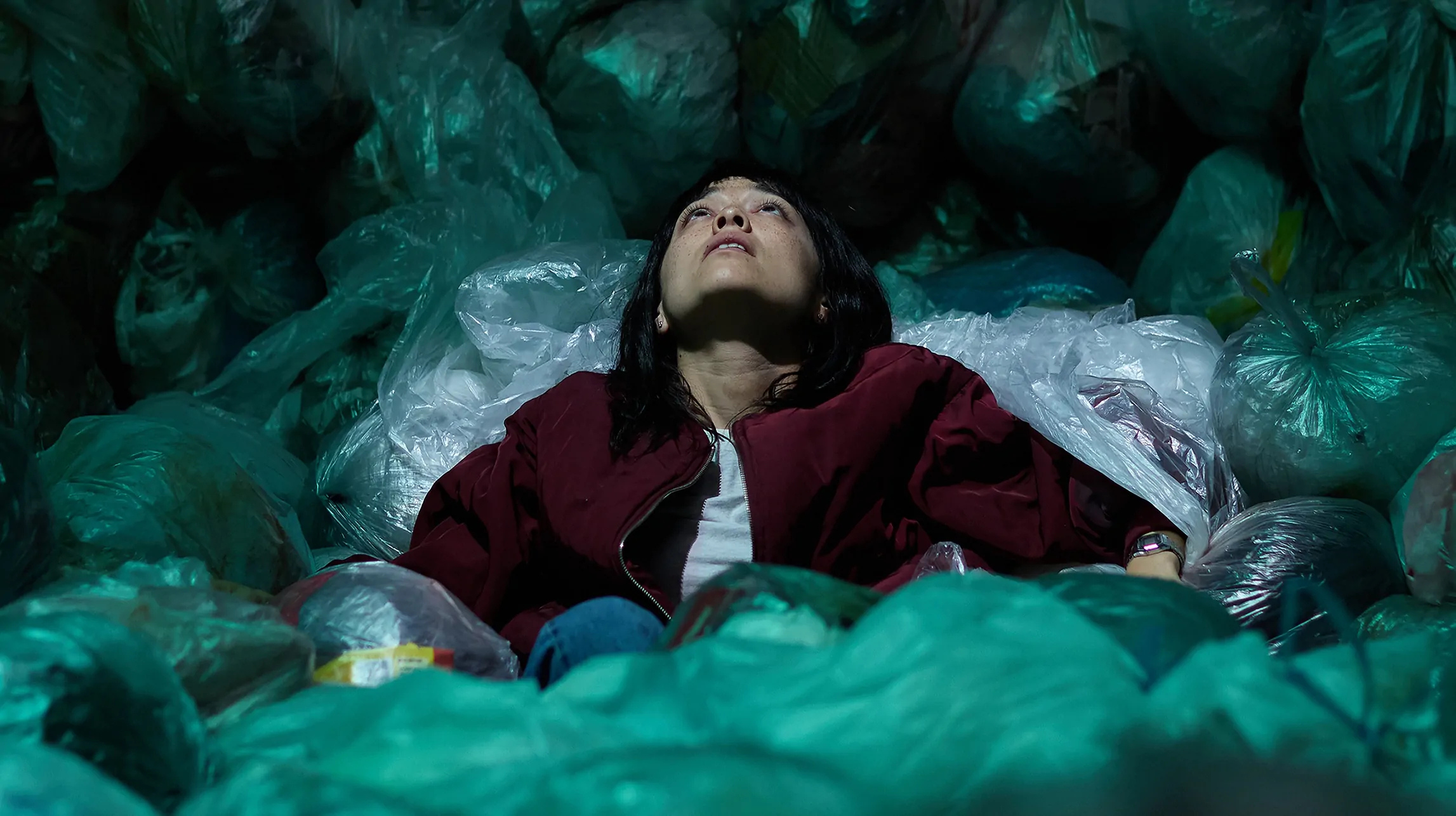
  • Upcoming Horror Releases May 2026

    Upcoming Horror Releases May 2026

    Estimated reading time: 4 minutes

    We’ve been treated to some excellent horror so far this year but here are five more upcoming horror releases for May that I’m excited to see. Are any of these also on your radar?

    Passenger

    A young couple witnesses an accident on the highway and is subsequently followed by a demon named the Passenger. This demonic presence won’t stop hounding them until he claims both their lives.

    Road trips, especially in remote places, are exciting but can take a turn for the terrifying. This film seems to capitalise on that fear of the unknown and the rational fear of road accidents.

    The trailer promises stomach-churning make-up, horrifying road scenes and jump scares galore.

    Image shows a still from upcoming horror release, Passenger. In the still, a demon is holding someone by the shoulder.
    Image Source: Rotten Tomatoes

    Corporate Retreat

    Icebreakers are the worst part of any job but corporate retreats? They’re the icing on the cake.

    This film is a dark horror-comedy that follows a group of young employees on a luxury corporate retreat. What begins as a team-building experience quickly descends into chaos as the retreat leader has other, bloody, ideas.

    Out of this selection, I would say this is the one I’m least excited for but I’m still intrigued by the trailers.

    The image shows a still from Corporate Retreat. One of the characters is screaming and holding their eye, with blood pouring down their face and hand.
    Image Source: Bloody Disgusting

    Saccharine

    Most of us have tried a weird diet fad or two but medical student Hana takes it a step further. When she eats human ashes as part of a weight-loss craze, the ghost of the person she’s eaten begins to haunt her.

    Recently, I’ve been enjoying media that considers the wellness industry and its various issues. From the trailer, Saccharine looks like it’s going to contain commentary about weight loss initiatives, fads and the rhetoric surrounding them.

    From this selection, I’m definitely most excited about this one just because I’ve loved books like Natural Beauty by Ling Ling Huang and Rouge by Mona Awad that discuss similar topics.

    The image is a still from upcoming horror release, Saccharine. In it, Hana looks into a spoon fearfully as though she is looking for something.
    Image Source: Variety

    Backrooms

    Backrooms is about what happens when a strange doorway opens up in the basement of a furniture showroom. This is an intriguing premise exploring liminality in a space that, to me, is already liminal. I have strong memories of being in furniture showrooms and carpet shops and feeling like I’d been lost to time.

    Liminal spaces have become a popular theme in horror media, including Backrooms and Exit 8, a recent release that explores a similar premise.

    The image is a still from Backrooms. It shows a bright-yellow liminal space that has office ceiling tiles, chevron wallpaper and a carpet.
    Image Source: The Mercury News

    Speed Demon

    In Speed Demon, a nun who has lost her faith must perform an exorcism on a possessed passenger before disaster strikes the train. This intersection between horror and religion is one of my favourite themes in film.

    Many of my favourites, including The Devils (1971) are older so it’s exciting to see a new release tackle similar themes and issues.

    The image is a still from Speed Demon. It shows a nun in the carriage of a train holding a statue of Christ towards something off-camera. She looks scared but determined.
    Image Source: Macabre Daily

    How many of these films are you excited for? Will they make audiences faint in fear or be vague disappointments?

    If you want to read about horror films that are already out, check out my reviews of Thrash and Something Very Bad Is Going to Happen.

  • Junji Ito Film Adaptations Double Bill

    Junji Ito Film Adaptations Double Bill

    Estimated reading time: 4 minutes

    This post marks the beginning of a new series I’m calling ‘Double Bill’ where I watch a duo of films that relate to each other. I’m not talking ‘horror films’ but rather a category that’s a little more focused. Today, we’re talking about two Junji Ito film adaptations that will have your head spinning, maybe literally.

    Tomie

    Director: Ataru Oikawa

    Running Time: 95 minutes

    Rating: 🌟🌟🌟1/2

    The first film in this double bill, Tomie (1998), follows Tsukiko, a photography student, who is attempting to recover some forgotten memories associated with repressed trauma. During her visits with a psychiatrist, she uncovers the name of her former best friend. A name that may allow her to remember everything. That name is Tomie.

    Meanwhile, Tomie’s head is regrowing a body in the custody of a recently escaped psychiatric hospital patient. Little does Tsukiko know that Tomie is growing fast and she’s out for revenge for an incident that occurred while the pair were at school together.

    Later in the film, we meet a dodgy detective who is investigating Tomie and her seemingly supernatural nature. According to him, she is immortal and has lived several lives, causing men to fall dangerously in love with her. In the past, the detective says she has driven several of her classmates to suicide.

    When Tsukiko and Tomie eventually meet once again, there are revelations which culminate in the finale. While she has been portrayed as an evil succubus who wants to use men for her own purposes, you could say Tomie is just your average high school student. She is self-conscious and curious but the Japanese educational and societal landscape does not allow for this in this time period.

    With an excellent score and dreamlike images, Tomie feels like a relic, like an old home video lost to time. Although very much reminiscent of late 90s J-horror, it also possesses its own charm despite the tropes. The ending can also be read from a feminist perspective which is not necessarily what I expected but which I appreciated.

    From the adaptation of Uzumaki by Junji Ito. The image shows a close-up of Shuichi's father who has become obsessed with spirals. He has a large grin on his face and his eyes have massively expanded. The hue of the image is green.
    Don’t you just hate it when you turn into a spiral? Image Source: The Asian Cinema Critic

    Uzumaki

    Director: Higuchinsky

    Running Time: 90 minutes

    Rating: 🌟🌟🌟

    Uzumaki (2000) is another film made in the late 90s/early 2000s J-horror period and based on a popular manga by Junji Ito. This one follows a town that has been cursed by spirals, causing people to become obsessed with the shape. Some people want to rid their bodies of spiral-shaped anatomical structures, some people want to collect spirals and some people become spirals themselves.

    A pair of high school students resist the urge to run away to try and save the other inhabitants, including their parents. When this doesn’t go to plan, the spirals quickly take over, causing havoc and mayhem across the town.

    While Uzumaki still has a fantastic score, dreamlike pacing and unique shots, it’s not quite as good as Tomie. The special effects are fun but also borderline laugh-out-loud and my eyebrows were raised for large portions of the film. It just didn’t have the same eeriness despite arguably being about a much more terrifying scenario. I certainly don’t know anyone who wants to become a spiral.

    Although both adaptations lack some clarity, there’s a section in the middle of Uzumaki which is totally bizarre and doesn’t seem to make any sense. A detective goes to the library to research the spirals and a series of images relating to cults and symbols pop up on the screen. This is then presented as a huge and important finding. However, it doesn’t feel that revelatory and immediately loses any traction once that detective meets their spiral-related fate.

    The image shows posters of the film adaptations of Tomie and Uzumaki by Junji Ito. The poster for Tomie shows a sinister eye looking through a hole in a plastic carrier bag with blood in it. The poster for Uzumaki is green and shows a person seated with long spiral hair coming out of their head.
    Horrifying film posters for Tomie and Uzumaki. Image Source: Wiki (Tomie) and Wiki (Uzumaki)

    Recommendations or Regrets?

    If I’d read the source materials, I think I may have harboured some disappointment because this seems to be the general theme amongst other people for whom Junji Ito is a favourite. However, because I watched these films with a separate perspective, I enjoyed them both for what they were.

    While they are both somewhat cheesy and lacking in some clarity, they both feel like fever dreams that I’d want to keep returning to. The standout aspects of both were the scores and I’d quite happily listen to them both on their own without rewatching the films.

    If you’re a fan of the 90s/early 2000s trends in J-horror, I’d recommend giving these two films a watch. Even if it’s just for the bizarre nature of them both, I think they’re worth adding to your watchlist.

  • Disfigurement and Spectacle in Georges Franju’s ‘Eyes Without a Face’

    Disfigurement and Spectacle in Georges Franju’s ‘Eyes Without a Face’

    Estimated reading time: 6 minutes

    Introduction

    Georges Franju’s Les Yeux Sans Visage, or Eyes Without a Face (1960), explored the topic of facial transplantation decades before it became possible in France. In the film, Christiane has a facial disfigurement following a car accident caused by her father. We see the people surrounding her treat her like a monster or like a wild animal in a zoo. Meanwhile, her father attempts to transplant the faces of beautiful women he kidnaps onto hers in a restorative manoeuvre that would simultaneously reward his scientific hubris.

    In this essay, I will discuss how Georges Franju uses disfigurement as a spectacle in the film. As Norden (2007, p.127) states, ‘the facially disfigured person is the most hackneyed symbol in cinema and theatre, commonly standing for something that has gone dreadfully wrong’. In Eyes Without a Face, this intersection between disfigurement and visibility highlights how women are gazed at differently when they have a facial difference.

    The image shows a hand reaching for a white mask.
    The hand reaches for the mask Christiane must wear. Image Source: Our Golden Age

    Music

    Jaunty music initially leads us into the film. This reminds me of the type of music you might hear at the circus. Overlaying Christiane’s misery with a cheerful tune highlights that disfigurement in this surgical context is fascinating. I would argue that Biernoff’s (2018, p.2) declaration, ‘this is the stuff of Gothic horror, grave robbers and Victorian freaks shows’ would apply to Franju’s film.

    This is because of the relationship between spectacle and fainting. According to Biernoff (p.10), ‘surgical spectaculars were a theatrical phenomenon as well as a cinematic one’ bewteen 1897 and 1962 with the number of faintings viewed as ‘a measure of an evening’s success’. Earlier in the essay, Biernoff (p.7) acknowledges that ‘several members of the audience reportedly fainted’ during Edna’s facial removal scene.

    There is no music or horrified expression when we see Christiane’s new face. We simply return to the regular male gaze with both her father and Louise commenting only on her beauty. There is no longer a fascination but rather a return to regular desire.

    The jaunty music is often also playing when Louise is on-screen. This appears to be to remind us she is in and of herself a spectacle because of her disfigurement. Although we don’t learn much about the scenario, we know that Génessier also operated on her with a greater degree of success. She also wears a visual reminder in the pearl necklace around her neck like a dog collar.

    Funereal Spectacle

    When the police find the body from the beginning, Génessier falsely identifies it as his daughter. He does this in an attempt to bide himself more time to get the transplant right. However, he does this at the expense of Mr Tessot and his daughter, whose body it really is.

    Once outside following the identification, Génessier gets into his car to avoid a barrage of questions and laments from Mr Tessot. His bright headlights briefly illuminate his unfortunate counterpart before quickly leaving him in darkness as he drives away. This is symbolic of Mr Tessot and his daughter’s removal from the spotlight so no one will look at or for her again. The camera’s gaze no longer sees her as her face has become Christiane’s.

    Later, Génessier holds a funeral for his ‘daughter’. Génessier designs this funereal spectacle to trick the gaze and distract it from the socially ‘monstrous’ face of his daughter in reality.

    The image shows Louise embracing Christiane while gazing at something off-screen. Christiane is wearing her mask and Louise is wearing her pearl necklace. They are both Génessier's guinea pigs.
    Both Christiane and Louise are Génessier’s guinea pigs. Image Source: The Guardian

    Christiane’s Mask

    The only time we see Christiane’s real face is through the eyes of Edna, a stranger. She is visibly terrified, screaming and Christiane’s face is only showed to the audience slightly blurred. This emphasises that spectacle is appealing when it’s separate and safe, but otherwise is considered socially ‘monstrous’.

    Christiane’s mask places a ‘safe’ barrier between the camera’s gaze and her face, but it is still horrifying. Kuntz (2012, p.263) suggests that ‘George Franju evokes horror not by giving an image to the face of violence but by forcing the violence to remain hidden behind a mask’. As such, the audience are aware of what lies beneath the mask and are equally horrified and fascinated.

    Clinical Gaze

    A woman in the crowd describes Génessier’s speech on ‘heterografts’ as ‘thrilling’. This delineates the fascination the average person may have had when considering complex surgeries like transplants. It may have seemed like something from science-fiction, hence the array of films released that explore this topic and adjacent topics.

    The medical photographs evidencing Christiane’s facial deterioration further belies a fascination with surgery. Biernoff (2018, p.11) asserts that ‘…the photographs perform a clinical gaze that objectifies and ‘cadaverises’ its human subject’. This ‘cadaverisation’ is also in various scenes where Christiane is laying despondently on her chaise longue or the floor, getting closer to death each time something goes wrong.

    Christiane is treated as an experiment in a similar manner to the dogs Génessier keeps. She is similarly confined to the house like the caged birds, evoking the image of animals in a zoo. Norden (2007, p.126) explains ‘…disabled movie/TV characters are typically created with a high degree of “to-be-looked-at-ness”‘ which this confinement is aligned with.

    Although the painting of Christiane and her phone calls to her fiancé remind us she no longer fits into society’s accepted definition of a woman, the clinical gaze is still present due to her disfigurement and her father’s experimental surgeries.

    The image shows one of the medical photographs from the film. Christiane is shot against a grey background and stares blankly at the camera. Her face has ulceration on both cheeks.
    Medical photography belies a fascination with the surgical. Image Source: Criterion Collection

    Edith Scob

    The actor who played Christiane, Edith Scob, explained the difficulty of acting without the use of her face. Since the mask was difficult to put on and began to crack when she talked, she had to remain silent while shooting scenes. She explained in a video on the Criterion Channel that she had to learn how to use her body language to act as her facial language was no longer available to her.

    Conclusion

    The spectacle in Eyes Without a Face serves to deflect, fascinate and horrify and it succeeds in these missions in various ways. Through the use of physical and auditory techniques, Georges Franju has emphasised his own, and the general fascination towards surgery in France at the time. Scob suggests the film was a ‘premonition’ of how the plastic surgery and facial transplant industries have developed. This makes you wonder what medical ‘miracles’ we see in science-fiction today might be only a few decades away from becoming reality.

    Thank you for reading this essay. If you’d like to delve into another film essay, you can read about colonialist, imperialist and racist attitudes in Black Narcissus (1947).

    Sources

    1. https://www.criterionchannel.com/videos/eyes-without-a-face
    2. The Changing Face of Evil in Film and Television, BRILL, 2007. ProQuest Ebook Central, https://ebookcentral.proquest.com/lib/open/detail.action?docID=556597.
    3. Biernoff, Suzannah. “Theatres of Surgery: The Cultural Pre-History of the Face Transplant.” Wellcome Open Research [England], vol. 3, 2018, p. 54, https://doi.org/10.12688/wellcomeopenres.14558.1.
    4. Theorizing Visual Studies : Writing Through the Discipline, edited by James Elkins, et al., Taylor & Francis Group, 2012. ProQuest Ebook Central, https://ebookcentral.proquest.com/lib/open/detail.action?docID=1101387.
    5. https://www.criterionchannel.com/videos/edith-scob-on-eyes-without-a-face
  • May 2026 Film Watchlist

    May 2026 Film Watchlist

    Estimated reading time: 6 minutes

    New Releases

    A selection of new release films that Kayleigh would like to watch in May. These films are, from left to right, Rose of Nevada, Exit 8, Hokum and The Drama. The image is comprised of the movie posters for each of these films.

    Last month, I began to enjoy films again and I’m now excited to watch as many as I can for the rest of the year. In recent years, I’ve struggled to watch as much because of other commitments. Now though, I want to focus more intentionally on this blog and reviewing films. This will be the first month where I watch films for the entirety. I can’t wait to see what my May film watchlist has to offer.

    May holds a range of exciting new films from across genres, including Mark Jenkin’s new release, Rose of Nevada (2026). Mark Jenkin’s debut feature film, Bait (2019) changed the way I think about film. In fact, it was the reason I made content five or six years ago before I disappeared. I live in northern England and as a child, our holidays were on the east coast so I’ve seen the damage overtourism can do. People take second holiday homes, buy caravans on the coast and generally outprice people who were born in our favourite seaside destinations. The exploration of this insidious process in Cornwall is explored in Bait so rigorously and unflinchingly that I promised to myself I’d watch everything Mark Jenkin releases in the future.

    Rose of Nevada is a ghost ship story with two members of a ship’s crew appearing to travel back in time. This foray into science fiction tells us that Mark Jenkin can put his hand to any genre and us, the viewers, will be better off for it.

    I watch several streamers on Twitch who have played the game version of Exit 8 (2025) and I’ve been enthralled by it each time. The concept of the liminal space, especially the ‘backrooms’ is increasingly intriguing as it removes the familiarity of a place just enough while retaining some sense of nostalgia or déjà vu. This combination generally makes for a terrifying experience and the clips I’ve seen so far do not disappoint. Even the man we watch trying to escape is unnamed, adding a further layer of anonymity and sense of abandonment.

    Horror is not always my favourite genre these days, although historically I’ve been a huge fan. However, my May film watchlist seems to be promising for the horror releases, Hokum (2026) included. This one is about a novelist who opts to stay in a remote inn, and hears stories about a witch who may or may not be haunting the honeymoon suite. I’m always cautious about films featuring witches, especially ones directed by men because I find they can veer into misogynistic territory but I’m hoping this one doesn’t disappoint.

    Finally, we have A24’s latest release, The Drama (2026), starring Robert Pattinson and Zendaya as a couple about to get married. However, one confession changes things and leads them to question whether or not the fateful ‘I do’ is for them. I recently watched Something Very Bad is Going To Happen (2026) and this concept of deciding whether or not you really know someone enough to marry them is fascinating, especially when there is some type of confession involved.

    Backlist Titles

    This images features four backlist titles Kayleigh would like to watch in May 2026. They are, from left to right, In the Mood for Love, Enys Men, Black Girl and The Farewell. The image is comprised of the movie posters of each of the films.

    Since I’ve been getting back into reviewing films, I’ve been scouring ‘best films of all time’ lists and a director who kept popping up was Wong Kar-wai. With several popular films, I was spoilt for choice when making my selection but to begin with, it was the premise of In the Mood for Love (2000) that intrigued me the most. In this film, two people realise their partners are cheating on them and become closer to each other without wanting to make the same choices.

    Having recently watched Past Lives (2023), I’m eager to delve into more films with relationship dynamics across more than two people. Just in case I wasn’t already convinced that I’m going to enjoy this one, I checked Letterboxd and was stunned by the sheer number of five star reviews. Usually films are at least a little more divided on there but this is one most seem to agree is almost flawless.

    Before I go to the cinema to watch Rose of Nevada, I’d like to watch Mark Jenkin’s previous film Enys Men (2022) for the first time. During my hiatus, I didn’t watch as many films as I normally would and this is one that slipped past me. It’s about a wildlife volunteer who descends into madness while on an island off the British coast. Mark Jenkin does tension incredibly well so I can only imagine he will fit right into the horror genre.

    Next, I wanted to choose a film that has provided inspiration to other filmmakers and the one I went with is Black Girl (1966). This film, directed by Ousmane Sembène, is cited as inspiration and chosen by many people entering the Criterion closet. I enjoy watching films from across the world and Senegal isn’t a country I’ve yet visited through the medium so I’m eager to do so.

    Black Girl is about a Senegalese woman who faces discrimination when she moves to France seeking a better life. In 2023, I read a book called Standing Heavy (2014) by GauZ’ which follows two Ivoirian men who try to work and live in France as undocumented workers, facing various trials. This theme of moving somewhere to get a better life but being faced with discrimination continues to be relevant and I’ve read that Black Girl is one of the best representations of this in the media.

    Finally, I chose the film that has been on my Letterboxd watchlist for the longest. Well, actually, it’s the second longest because the longest was Parasite (2019) and I would like to wait and get the Bong Joon-ho boxset which includes this and others of his films I’m excited to get to. The Farewell (2019) follows a Chinese-American woman who returns to China to see her terminally ill grandmother. As well as relationship dynamics, I’ve been enjoying seeing family dynamics on screen and I think this will force me through one hundred emotions in its one hundred minute runtime.

    It’s likely (I hope), that I’ll watch a lot more films than those featured in this May film watchlist but these are the ones I’ll be prioritising in the upcoming days. If you have any recommendations for me, please leave a comment and thank you for reading.